Philadelphia, PA
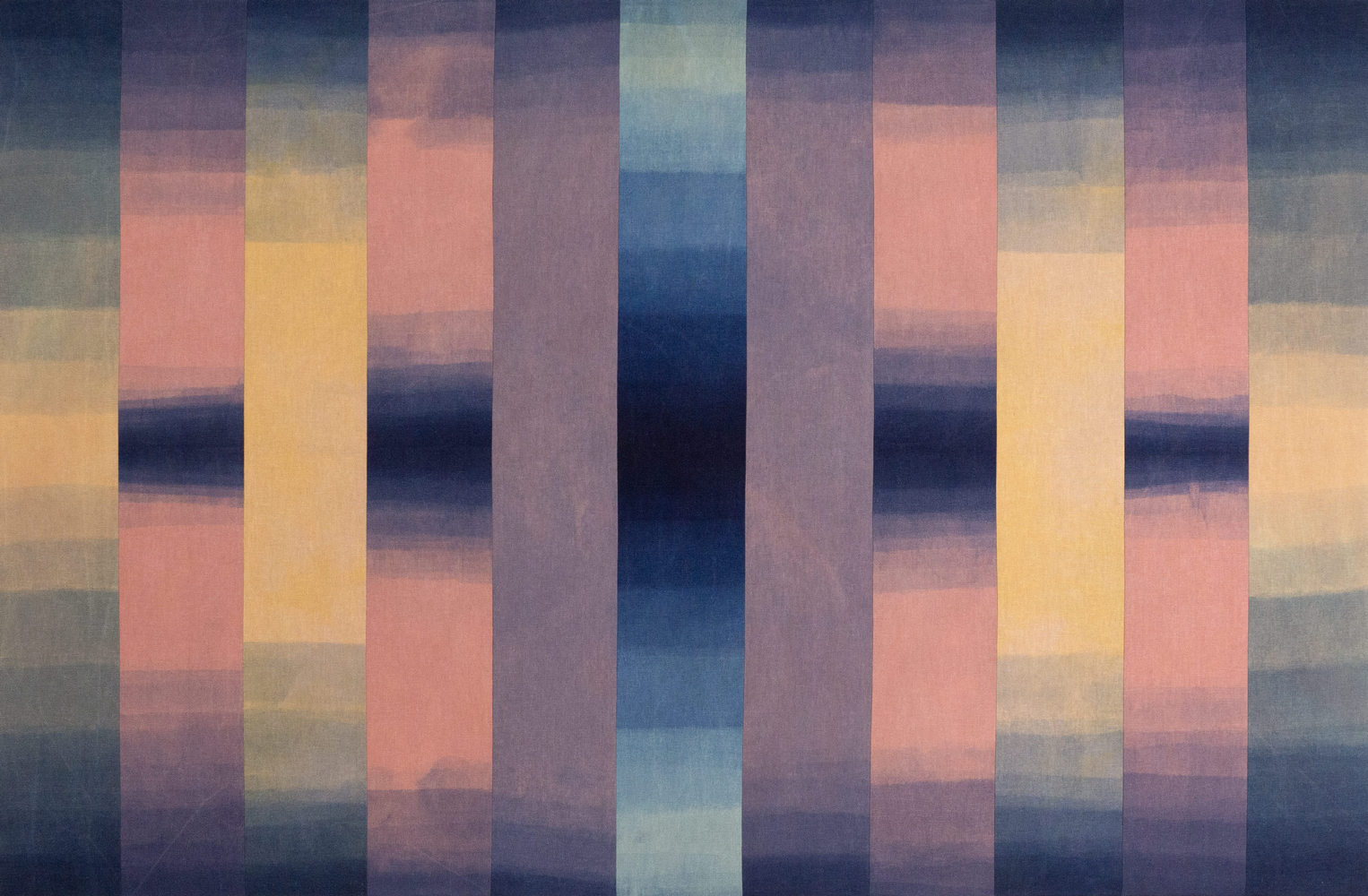
Thought forms, known by Tibetan Buddhists as tulpas, are energetic patterns that exist in nature and are shaped by our thoughts. In her 1905 book Thought-Forms, Annie Besant describes forms that represent inherent qualities from the astral and mental planes. According to Besant, "The radiating vibration conveys the character of the thought, but not its subject." The paintings channeled through this work—what we often refer to as "portals"—are intended to record the essence of the process, reflecting both the life energy of the dye plants and the artists' hands. Each piece begins with folded linen canvases submerged in flower dye baths. Indigo, one of the world's oldest dye plants, is used in nearly every piece. The depth of shade comes from repeated immersions in the indigo vat, rather than from the amount of plant matter in the dye bath. The dye must oxidize to achieve its final blue shade—when first removed from the vat, the dye appears bright yellow or green. Only through exposure to oxygen does the blue color emerge. This creates a slow, meditative process: dark, magnetic shades of blue develop through continually suspending the paintings in dye, removing them for oxidation, and returning them to the vat for another layer. In Besant's writing, she notes how deep shades of blue appear in meditations on devotion and self-renunciation. The gradations in our work, especially visible in pieces such as Moonbeam, emerge from this meditative process of immersion, oxidation, and methodical adjustment of how much canvas enters the indigo vat. The resulting calming, vibrating image reflects pure devotion. Through this devotion emerges a painting that radiates peace and serenity.